Posts

When bilateral relations triumph over regional
Image
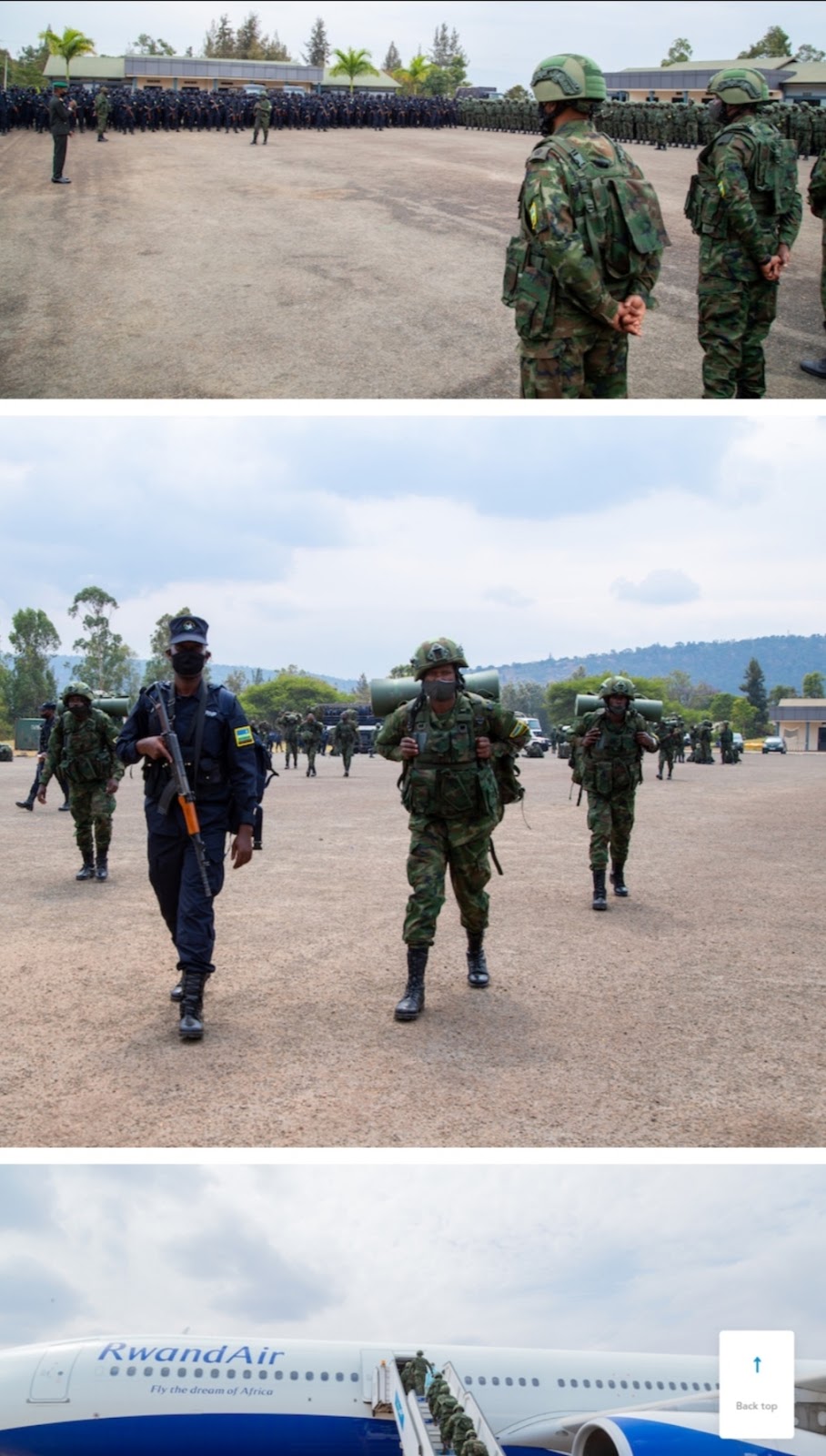
The Southern African Development Community (SADC) countries might have been disappointed at Rwanda’s precedence over the deployment of its forces to the troubled Mozambique, ahead of defense deployment from their countries, but the Rwandan and Mozambican governments have had good bilateral relations strengthened at the signing of several agreements in 2018.  Mozambique, geographically located in the southern part of the African continent, is a regional member of the SADC, while Rwanda belongs to the East African Community (EAC). The Rwandan government had almost a week ahead of SADC’s finalization of its troops deployment to Mozambique, announced that it was in the process of deploying a 1000 person contingent of the Rwanda Defence Force (RDF) and the Rwanda National Police (RNP) to Mozambique’s province of Cabo Delgado, which had been terrorized by insurgents, at the request of the Mozambique government.  Rwanda had in its statement not shied away that its deploym...

eSwatini a Case Study for IR

Image
The events in eSwatini took a drastic turn this week when the United States of America (U.S.) embassy divulged information of the shooting of an embassy vehicle, and with the United Nations Human Rights Office of the High Commissioner (OHCHR) reminding the eSwatini government of its commitment to the international human rights law, amid the ongoing violence and unrest in the country. The U.S. embassy had on Thurday confirmed the shooting of an embassy vehicle on 01 July at the height of the prodemocracy protests and heavy deployment of government armed forces, and what government had described as mercenaries.  The embassy said the eSwatini Ministry of Foreign Affairs was informed of the incident via a diplomatic note; which was a standard form of communication between all diplomatic missions and the eSwatini Ministry of Foreign Affairs. The U.S. had this week also increased its Marine Security Guards following the shooting incident.  In a statement issued by the em...

Pro-democracy protests in eSwatini

Image
The Kingdom of eSwatini made international headlines this week as calls for democratic reforms in the country intensified through protests.  ESwatini is an absolute monarchy governed by the Tinkhundla systems.  Pro-democracy civilians had taken to the streets to demand reform of the current governance system. A curfew from 18h00 until 05h00 was imposed as the civil unrest grew, with reports of loss of life and burning of property. During this time, reports of King Mswati III having fled the country emerged via social media platforms, which the government of eSwatini disputed indicating as ‘false media reports’.  South African multinational telecommunications company operating in the country, MTN, had during this time also reported interruption of internet services, which emaSwati and civil society, including Amnesty International, viewed as a direct violation of human rights and aimed at curbing the spread of information pertaining developments in the country....

Youth and international spaces

Image
Despite South Africa having a vibrant and radical youth, as witnessed during the 1976 Uprising and recently with the #FeesMustFall protests, the involvement of young people in international diplomacy remains frustrating. During a recent youth dialogue, hosted by the Department of International Relations and Cooperation (DIRCO) under the theme; Enhancing Representation and Leadership of Youth in Foreign Policy Space, a number of young people called for the institutionalization of transcontinental spaces, inclusivity at DIRCO, and to be considered for the country’s foreign relations posts.  The panel discussion had uncovered the lack of youth involvement not only in foreign policy-making, but also on the global programs such the Build Back Better , as countries around the world sought to rebuild post the Covid-19 pandemic.  Acting Chief Operations Officer (COO) at DIRCO, Charlotte Lobe, said the rules and protocol in international diplomacy were sometimes too complex...

SA's position on HIV/AIDS

Image
HIV/AIDS continues to be one of the concerning global epidemics world leaders are still grappling with. The United Nations (UN) had last week (8-11 June 2021) held a High Level Meeting on HIV/AIDS. South Africa, represented by Deputy President (DP) David Mabuza, in his capacity as the DP and Chairperson of the multi-sectoral body, the South African National AIDS Council (SANAC), had reiterated to the world the country's support for the 2021 Political Declaration towards ending AIDS.   South Africa affirmed that the protection of human rights of people living with HIV and other key and vulnerable populations, is paramount to enabling access to services and fighting stigma and discrimination. "In order for the world to succeed in ending AIDS by 2030, we need to recognise and protect the rights of all key and vulnerable populations by involving people living with HIV and placing communities at the centre of our response," said Mabuza. South Africa further advance...

Media Statement

Image
Media Statement 07 June 2021 PRESIDENT TO ADDRESS THE COMMITTEE OF AFRICAN HEADS OF STATE AND GOVERNMENT ON CLIMATE CHANGE President Cyril Ramaphosa will tomorrow, 8 June 2021, address and chair the virtual meeting of the Committee of African Heads of State and Government on Climate Change (CAHOSCC). The President will chair the meeting in his capacity as the Coordinator of this continental structure.    The Committee was established in 2009 by the AU Assembly of Heads of State and Government to spearhead an African Common Position on Climate Change and ensure that Africa speaks with one voice in global climate change negotiations. The Committee’s deliberations this week form part of preparations for COP26, the 26th United Nations Climate Change conference, which will be held in the United Kingdom in November 2021. The meeting will deliberate on the African Green Stimulus Programme and the current status of the international climate negotiations in light of the COV...

Importance of academia in foreign-policy

Image
The University of Limpopo (UL) in collaboration with the Department of International Relations and Cooperation (DIRCO) had on 26 May 2021 convened a virtual symposium to discuss: The Importance of Education (Academia) in the Formulation of South Africa’s Foreign Policy. DIRCO Deputy Minister, Candith Mashego-Dlamini, delivered the keynote address, in which she shared the importance of academics and scholars in the formulation of foreign policy. “As thought leaders, you also constitute part of the broader civil society movements, and your influence must never be understated,” she said speaking at the UL’s Turfloop Campus. Minister Mashego-Dlamini further said studies by the academia provided guidance in imagining an Africa that is united, independent and prosperous.  “We want to hear more African voices,” she emphasized.  Researcher, Remofiloe Lobakeng, said foreign-policy making cannot exist in a vacuum. Lobakeng said barriers between the academia and foreign-polic...

Honouring the legacy of Charlotte Maxeke

Image
In honouring the legacy of Mama Charlotte Maxeke, the Department of International Relations and Cooperation (DIRCO) will next month launch an initiative aimed at mobilising the global community behind the Gender Equality Forum (GEF)’s Global Acceleration Plan, particularly the Action Coalition on Economic Justice and Rights. The Charlotte Maxeke African Women’s Economic Justice and Rights Initiative was to be implemented in three phases, namely; Charlotte Maxeke Africa Future Leadership Programme, Charlotte Maxeke African Women's Leadership Awards, and the Charlotte Maxeke Minister's Breakfast with Women Ambassadors. The Charlotte Maxeke Africa Future Leadership Programme was aimed at providing mentorship and training opportunities for youth on international policy and diplomacy work. The programme, to be launched in June, was to target 70% youth leaders from the continent and 30% from the country.  The Charlotte Maxeke African Women's Leadership Awards were to celebrate wo...

Student formations confront global issues

Image
The South African Union of Students (SAUS) held its ordinary National Executive Committee (NEC) meeting on 15 May 2021 at the Cape Peninsula University of Technology (CPUT).  SAUS said in a statement post the NEC meeting that it had discussed a number of socio-economic, political, and higher education matters. One of the key issues was the current regional and international political situation.  SAUS has condemned what it called ‘the callous brutality and repression’ meted out against the people of Palestine.  “SAUS has consistently expressed its profound opposition to the colonial occupation of Palestinian Land by the Israeli regime,” read the NEC statement. The meeting was stated to have further pledged to strengthen the existing efforts of boycott, sanctions and pickets across higher education institutions in demonstrating solidarity with the people of Palestine. The student union had also called on the African Union (AU) to address the issues of climate change and foo...

South Africa's tenure on UNSC and AU

Image
I had in my previous entry- Behind the name DIRCO- indicated my intention of taking further the discussion around the structure of ‘international relations’ and its institutions, South Africa’s foreign policy, and the look at how far South Africa was able to pursue its interests when it enjoyed a non-permanent member seat on the United Nations Security Council (UNSC) for the period 2019-2020 and when it was chair of the African Union (AU) in 2020.    I was eager to recently learn of the Nelson Mandela University, in collaboration with the Department of International Relations and Cooperation (DIRCO), public diplomacy lecture which was themed: Celebrating Multilateralism and South Africa’s role on the UNSC and Chairship of the AU, where DIRCO Deputy Minister, Alvin Botes, had delivered the keynote address. Deputy Minister Botes had recognised the importance of the transformation of the UNSC in deepening multilateralism. Minister Botes said South Africa was calling f...

President Ramaphosa expresses condolences to the Queen

Image
South Africa's President, Cyril Ramaphosa, had on Friday, 09 April 2021 expressed condolences on behalf of his Government and the people of South Africa  to Her Majesty, Queen Elizabeth II,   on the passing of the Queen's husband, Prince Philip- Duke of Edinburgh.  Prince Philip passed away on Friday  (09 April 2021), at the age of 99. He  was the longest-serving consort in the history of the British monarchy. [Source: Al Jazeera]  "President Ramaphosa says South Africa’s thoughts and prayers are with Her Majesty, the Royal Family, the Government and people of the United Kingdom as they mourn their loss," read an official statement issued by the office of the President.    President Ramaphosa had described Prince Philip as a remarkable public figure who lived an extraordinary life and said he will be fondly remembered by many people around the world.

Strengthening bilateral relations

Image
President of the Republic of Botswana, Dr. Mokgweetsi Masisi, and his delegation, had on 06 April 2021 embarked on a Working Visit to the Kingdom of Eswatini.  The Visit was aimed at the two heads of states, Masisi and His Majesty King Mswati III, engaging on issues of mutual interest and concern, particularly in finding common solutions to the socio-economic challenges presented by Covid-19. The High-Level Visit to Eswatini by Botswana was the second; the first was in May 2018.   The Botswana Ministry of International Affairs and Cooperation said the last visit had “provided the two leaders the opportunity to discuss areas of cooperation in health, education, defence and security.”  Meanwhile in South Africa, Deputy Minister of International Relations and Cooperation, Alvin Botes, will on Thursday, 08 April 2021, be joined by Ukraine Ambassador to South Africa, Liubov Abravitova, in a community outreach programme at three schools in George, in the Wester...

SADC to deliberate on security situation in Mozambique

Image
The Southern African Development Community (SADC) will on Thursday, 08 April 2021, convene an Extraordinary Double Troika Summit in Maputo, Mozambique, to deliberate on measures to address the terrorist attacks in Mozambique. President of Botswana, Mokgweetsi Masisi, in his capacity as Chair of the SADC Organ on Politics, Defence and Security Cooperation, had on 31 March 2021 issued a statement expressing the SADC concern with the persistent terrorist attacks in the country and reaffirmed support for Mozambique.  “We wish to express our full solidarity with the Government and people of the Republic of Mozambique, as well as the armed forces on the ground, who are working towards restoring peace and security in the affected areas. We also wish to reaffirm our continued commitment to contribute towards the efforts to bring about lasting peace and security, as well as reconciliation and development in Mozambique.” Masisi said the attacks were an affront to peace and securi...

Behind the name DIRCO

Image
On the 10th of March (2021), I had a chance to listen to an interesting, but also thought-provoking chat held by the University of Pretoria (UP) through its LeadUP: In Conversation with the VC discussions.  Centered around the theme ‘International Relations: Strategies for strengthening SA’s reputation on the global stage’ this discussion had raised the significance behind the country's (South Africa) international relations ministry name, the Department of International Relations and Cooperation (DIRCO), as we know it.  The Vice-Chancellor (VC) and Principal at UP, Professor Tawana Kupe, said for him the name DIRCO had connoted something that meant pursing a good goal in the public interest. In her response to Professor Kupe on how international relations and cooperation was expressed in the actual practice, the Honourable Minister of DIRCO, Dr Naledi Pandor, said; in building international collaboration and partnerships, the government had realized that the practice of diplo...